Monday, January 21, 2013

'Snow need to worry. 1963 was worse.

As usual a few flakes of snow and everyone panics. It seems drivers today have no idea of how to drive in snow. They feel themselves sliding or their wheels spinning and try to correct this by braking hard or accelerating. Both being the wrong way to correct things. The trick when driving in snow is to drive as though you have a wineglass which you don't want to spill, balanced on your dashboard. You don't brake hard and neither do you accelerate or turn sharply.  Leave a much bigger gap between you and the car in front and watch out for people who could slide into you. With good tyres and a little bit of care a small amount of snow - say less than ten inches, shouldn't stop you.

I do however remember an extremely bad winter. That of 1963. It was bitterly cold, the coldest on record with temperatures down to -18ºC, and it snowed in a big way! Incidentally at -18ºC putting salt on ice won't melt it.

That year I was living on a hill farm in the North Pennines. The first I remember of that winter was when my father opened the front door and was met by a solid wall of snow. The previous five winters at the farm had taught us to keep a shovel inside the house so a few minutes digging got us outside. There had been a heavy snowfall. Added to that a howling wind had picked up most of the snow on the fells above us and blew it all into drifts in the valley where we lived. It was one of those drifts which buried our front door and the window of our sitting room. The picture shows our family standing outside that door and window later that summer. That's me on the left.

We had to dig our way across the farmyard to the cow byre to feed the cows and while we were doing that the postman arrived. He had made it as far as our lane but had then given up. He left the mail for the village of Carrshield at the Chapel below our house saying, 'If anyone gets here from there or goes there - ask them to take it'. Carrshield was a mere 2 miles from our house, further up the valley so to a 14-year-old boy that was a challenge. I got prepared. By then we had learnt to wear two pairs of jeans, one inside our wellingtons and one outside. Not only did that keep out the bitter wind but it also prevented snow from getting inside wellingtons. I put on a thick pullover, mits, Woolen hat and two jackets, one with a hood. Looking like the Michelin man I made my way down the lane to the chapel, struggled to put the post bag over my shoulder and marched off into the blizzard.

About 200 yards further the road went through a series of bends, through a small wood and over a small stream. It was there I met one of our neighbours, Roland Johnson, trying to dig out his Landrover which had got stuck in the snow. I gave him a hand and he turned back towards his home. I continued up the road - or at least what I thought was the road since the snow had completely covered it, the wall at the left and the fence at my right. It was hard going since the snow was soft and deep. I sank up to my thighs in it and began to think plans for making a set of snowshoes out of old tennis rackets.

About another 20 yards and I got tangled up in something buried in the snow. Fence wires? Nope it was telephone wires still attached and normally 20 feet in the air. That's when I gave up! Carrshield's mail could wait.

The snow there turned out to be 22 feet deep after it had packed down and been dug out. One of the pictures I have of it shows my brother-in-law, Colin Graham, standing on the shoulders of a friend, Brian Myers, next to the drift. As you can see the snow still towers above them.

It took gangs of men three weeks to dig their way to Carrshield. Even then there was one road which remained closed even longer where it went through a cutting which had been completely filled with a 44-foot-deep snow drift.


As to that 44-foot drift; 1963 was the first year the council tried out snow blowers. They imported one from Switzerland, brought it by low loader to Hexham then drove it from there towards that drift. About 200 yards from it, it broke down and the drift had to be cut out by men with shovels and mechanical diggers.

Incidentally, those snow blowers made keeping the roads open much easier. They did flatten a few greenhouses though until the council erected signs saying 'Snowblower - Blow left'. The guide wheel they used left a track which we all learnt to avoid - get your foot in that on a slope and it was like wearing ice skates.

It took a long time for the snow to melt that year. In June, when I came home at half term for a holiday there was still snow in places.

Now if it should get as bad as this again here are a few tips about driving:

  • DON'T - stay home unless it's absolutely essential.
  • Remember, drive as though you have a glass of red wine on your dashboard and don't want to spill it.
  • Don't think of going on a long journey without a full tank of fuel.
  • Carry a snow shovel
  • Carry some cat litter! It's a lot lighter than grit and works well in snow to give slipping wheels traction.
  • Carry some flattened cardboard boxes. Place them under a slipping wheel.
  • Shoes are good to drive in but carry boots to change into if you have to get out.
  • If you are making a long journey - plan what you will do if you get stuck in a blizzard. Got warm clothes? A sleeping bag? Something to eat? Something to drink? 
  • Carry a torch and some tealight candles. Tealight candles give a surprising amount of heat out, make a snowbound car a lot more cheerful and help rescuers find you.
  • If your car is buried, you MUST keep the exhaust pipe clear. Otherwise, when you run the engine to warm up the car you could end up killing yourself through carbon monoxide poisoning.


If this post has been of interest to you, would you do me a favour in return? Download a FREE copy of the book I co-author - a romantic technothriller called 'A Vested Interest'. Even if you don't read it, it will help our ratings. You can get it at https://books2read.com/immgen and if you want to read it, you can use a phone, a tablet, a computer or even a Kindle.


Monday, December 31, 2012

Ten predictions for 2013


Predictions for 2013

OK I've decided to play the oracle and look forward into the future. What will 2013 hold for us?

1. Sooner or later Israel and Iran will come to blows. This will inflame an already tense area. Pressure will be put on governments of Europe and America to support one side or the other. A total arms embargo supported by the US, Europe, Russia and China might delay the flashpoint. One thing is pretty clear, for Iran to lob a nuclear missile at Israel would be a good way for them to commit mass suicide. Israel would squash them. As to the rest of the Arab World - they might not like Israel but Arabs have never been fond of Persians! They might well sit back, let them fight it out and then think about dealing with a weakened winner.
2. The US economy will go from crisis to crisis with little improvement. The rich will get richer and the poor will get poorer. There will be ever increasing calls from the 99% for increased taxation starting at about £60,000 ($100,000) Forget that taxation at $450,000.
3. Europe will be much the same as the US and will continue to go from crisis to crisis, shoring up until they follow Iceland's lead and jail the bankers.
4. Apple will ditch the mini iPad, replacing it with a 'Retina' version and annoying thousands who bought the current mini. This, together with Java being removed in October  to protect virus stricken Macs and those infuriated by Apple Maps will see the end of the 'Apple can do no wrong' era.
5. Technology will take enormous leaps and bounds with nanotechnology and genetics having major impact.
6. Memristors, almost unheard of today, will transform computers making processors faster, cheaper, more powerful and memory less expensive. Memristors will begin to take over from DVD and Blue Ray.
7. HP will make a comeback in a big way, largely as a result of their investment in memristors.
8. We will continue to hear of miracle drugs promising the end to cancer and this year - there's a good chance of these being produced.
9. Populations will become increasingly disillusioned with central government.
10. Carbon emission targets will not be met. Fuel prices will continue to rise and pressure will be put on governments to fund/support serious renewable energy projects. The debate over global warming will continue with ever greater extremes of weather being believed to be climate change. (Things should start to cool down in 2014)

Updates

Seems people can lose faith in Apple - http://www.bbc.co.uk/news/business-21186991

Sunday, December 23, 2012

Exactly when does the new year start? (Reductio ad absurdum 3)

OK I promised in an earlier blog to tell you how September, October, November and December got their names so this is from my genealogy site http://genlinks.org.uk:
    Before 1751 the year started on 'Lady Day' - 25 March. Until then, we used the Julian calendar (introduced by Julius Caesar in 45 BCE) in the UK. This meant that 31 December 1740 was followed by 1 Jan 1740 and continued until 24 March 1740. The next day was 25 March 1741. This causes a lot of confusion to people researching their family history, so in the years before 1752, you may find dates in transcripts referred to as January 03 1740/1, indicating that this was the 3 January 1740 by the calendar at the time but, 1741 by our calendar. This double dating is used only on dates between 1 January and 24 March.

    By 1751, it was realised that the Julian calendar did not keep pace with the Sun and that Easter was arriving later each year. A change was made to the Gregorian calendar (named after the Pope who worked it out), this meant the dates ran as follows:
    • 1750 ran from 25 March to 24 March, 365 days
    • 1751 ran from 25 March to 31 December, 282 days
    • 1752 ran from 1 January to 31 December, 354 days. It should have been a leap year but, the 29 Feb. and 11 days from the 3rd tothe 13th September were missed out to bring the calendar back in line with the Sun).
    • 1753 ran from 1 January to 31 December, 365 days
    The change in calendar upset quiet a lot of people, there were riots in some parts of the country where people felt that 11 days were being stolen from their life.

    The tax authorities never worked up the courage to tax people twice in less than 365 days and if you add 11 days to 25 March, you will find the date is 6 April - the start of the new tax year in the UK.

    You should note that Roman Catholic countries had changed to the Gregorian calendar by papal edict in October 1582. Protistent countries were slow to adopt the much better Gregorian calendar. The UK was one of the earliest to adopt it; others did not do so until the 20th Century.

    By the Julian calendar, September was the 7th month (Sep being the prefix for 7 as in septuagenarian , October the 8th month (oct meaning 8 as in octopus), November the 9th month and December the 10th month, hence their names. 

    Incidentally, this was not the first time the calendar had been reformed but, is the only one you are likely to come across.
    • From the sixth century to 1066, the year ran from Christmas Day to the 24 December;
    • From 1067 to 1155, the year ran from the 1 January to 31 December; 
    • From 1156 to 1751, the year ran from 25 March to 24 March.
That means the months September to December relate to the months following Lady Day - the 'Lady' in question being the Virgin Mary. 

Maybe we should re-name those months also to avoid offending non-Christians?


If this post has proved of interest to you would you do me a favour in return? Download a FREE copy of the book I co-author - a romantic technothriller called 'Immortality Gene'. Even if you don't read it it will help our ratings. You can get it at http://smarturl.it/avi and if you want to read it, you can use a phone, a tablet, a computer or even a Kindle.

Samsung Galaxy S3 Alarm - No sound Solution

My wife just upgraded her phone to a Samsung Galaxy S3 and ran into a problem. The alarm suddenly stopped playing an alarm sound. After going through the alarm and sound settings she passed the problem to me.

It took me a while to track down the problem. Lots of other people seem to be having it also. In the end I discovered the problem was caused by a telephone marketer and poor default settings on the Blocking Mode.

The Galaxy S3 makes it easy to block unwanted telemarketing calls and when my wife got one she immediately added it to the offered 'Blocking Mode'. Blocking mode was started and that's when her alarm problem began. She didn't notice it but she wasn't hearing incoming calls either!

It's easy to fix. From your home screen swipe down from the top right hand corner of the screen. You'll see at the top under 'Ongoing' Blocking mode. Tap it and remove the check mark from 'Disable alarm and timer' then go down the screen and turn 'Allowed contacts' to 'All contacts'. Had you noticed that your phone was not playing ringtones?

Sunday, December 09, 2012

A very merry 'Seasonal Greeting' or 'Reductio ad absurdum 2'

Surely you mean Merry Christmas?

There are loads of people on Internet who are upset that some people use the phrases 'Happy Holidays' and 'Holiday season trees' instead of 'Happy Christmas' and 'Christmas trees'. Officialdom is making these changes so as not to offend those of other faiths and those who are not religious. Each year we get this but in most cases, it simply isn't true.

BUT if it was true...

Yes - I can see their point BUT we can't stop there. There's an expression 'Reductio ad absurdum' which means following the implications of something to an absurd conclusion. Let's apply a little of this to the days of the week.

How the days got their names

Mithras - the sun god
  • Sunday meaning "sun's day", the name of a pagan Roman holiday. It's the same in German: Sonntag and Dutch: zondag. Both meaning 'sun-day'
  • Monday Means Moon-day. The name comes from the Anglo-Saxon monandaeg. This second day was sacred to the goddess of the moon. In French: lundi; Italian: lunedi. Spanish: lunes. All from Luna, "Moon". In German: Montag; Dutch: maandag. [both: 'moon-day']
  • Tuesday was named after the Norse god Tyr. The Romans named this day after their war-god Mars: dies Martis This is apparent in French: mardi; Italian: martedi; Spanish: martes.
  • Wodin and Frigg
  • Wednesday was named after Wodan (Odin). The Dutch used the same god to get Woensdag. The Romans called this day 'dies Mercurii', after their god Mercury from which we get French: mercredi; Italian: mercoledi; Spanish: miércoles.
  • Thursday is named after the Norse god Thor. In the Norse languages this day is called Torsdag. The Romans named this day 'dies Jovis' ("Jove's Day"), after Jove or Jupiter, their most important god. This accounts for the French: jeudi; Italian: giovedi; Spanish: jueves.
  • Frigg

    Friday
    is named in honor of the Norse goddess Frigg, the wife of Odin. Her name also accounts for the German: Freitag and Dutch: vrijdag. The Romans named this day after the goddess Venus (dies veneris). From this we get French: Vendredi; Italian: Venerdi; Spanish: Viernes.
  • Saturday is from the Latin dies Saturni or "Saturn's Day", by the ancient Romans in honor of Saturn. This also gives us French: Samedi; Italian: Sabato; Spanish: Sábádo; German: Samstag; Dutch: zaterdag.


That means that every day of the week must be renamed so that the days do not offend those of other faiths (including Christian) and those who are non-religious and we can't stop there either:

The months too


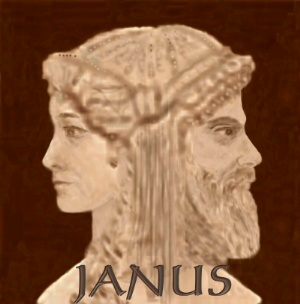
  • January is named after the Roman god of beginnings and endings Janus.
  • February comes either from the old-Italian god Februus or else from februa, signifying the festivals of purification celebrated in Rome during this month.
  • March is named after Mars the Roman god of war.
  • April is OK because being in spring it got it's name from the Latin aperire, "to open". Think opening buds. Wait a minute - maybe that would offend those in the southern hemisphere where it would be autumn. Granted that's only 10% of the world population but we believe minorities should be able to dictate to the majority. Right?
  • May gets it's name from Maiesta, the Roman goddess of honor and reverence.
  • June was named in honor of Juno, another Roman goddess who was the wife of Jupiter and mother of Mars.


So that means we have to rename every day of the week and the first six months of the year so that we don't offend. Think of all the diaries and calendars which will need changing. Think of the problems it will give us when we try to remember the new names of the days and months or the problems it will cause our descendants in the future when they look up a date. On balance I think it might be better to stick with what we have and if we are going to do that we might as well stick with Christmas.

So everyone - I'm looking forward to Christmas this year and if you are offended by that then you are welcome to pay for the date changes and have the blame for all the trouble it will cause.

Postscript - I know someone will ask so here's the rest of the months:
July got it's name from Julius Caesar who was born in this month. August was named after the Emperor Augustus. Maybe those ones are OK.
We don't need to worry about September, October, November, December because they come from the Latin for seven, eight, nine and ten. Huh! Shouldn't that be nine, ten, eleven and twelve? No - but that's another story.


If my blog has entertained you - can you do me a favour?

Get it at http://smarturl.it/avi (Amazon) or http://smarturl.it/iavi (iBook)
Download a free copy of the book I co-author 'Immortality Gene'. It's a technothriller, romance, medical thriller, science fiction... a bit of everything. Even if you don't read it, it will help our ratings. Available at Amazon, iTunes, B&N and others FREE!

Reductio ad absurdum 1

I once heard the comedian Dave Allen tell this story as he took a drink from his whiskey glass:
"You know I read that 40% of accidents on the road are caused by people who drink. If you look at that from the other side that means 60% are caused by people who don't drink...," he paused and took another drink from his glass. "...so why don't they get off the road and leave us drunks to drive in safety?"

That's an example of 'reductio ad absurdum' or following implications to an absurd extent. I love them and I've been collecting them over the years:

From 'Monk-e-business' at http://www.melcroucher.com/melspages/zygote/

  • How are you feeling? Buddhist monks are reckoned to be happy, enlightened folk. They are not burdened by possessions, and in fact they carry their material wealth around with them. All they own is a plain robe, and a simple bag containing a wooden bowl, a water strainer and a needle and thread. Last time Zygote checked, the full monk kit would only set you back twenty quid from Tesco’s “you shop, we drop” online service. Meanwhile, Zurich Insurance has recently profiled the exact amount of wealth the average British citizen carries around with them. Staggeringly, and the use of that word is highly appropriate, we are toting an average of £1,043 worth of kit around with us when we step outside the front door. Most of that is in the form of accessories and electronic gadgets, including MP3 players, laptops, phones, cameras, sat-navs and the like. If you think about these things at all, you may think that the more we are weighed down by all these bits of expensive kit, the less enlightened we are. But according to yet another government report, you would be wrong. There is one more important item that most of us carry around with us at all times, and it is represented by plastic credit cards encoded by smart little electronic chips. And what they represent is debt. Steaming great piles of debt. The average UK adult is in debt via credit cards, overdrafts and unsecured personal loans to the tune of £4,506. According to Zygote’s diamond-studded calculator, if you subtract the average UK portable wealth from the average UK portable debt, then we clock in at minus £3,463. In other words, thanks to useless electronic gadgets and virtual debt the average UK citizen is 173 times more likely to reach Nirvana than the average Buddhist monk. Now doesn’t that make you feel better?


From SOPA and Writers at http://www.epublishabook.com/2012/01/23/sopa-and-writers/


  • SOPA as I understand it wants to block sites which contain pirated content. Presumably that will be done by removing the domain name from DNS servers. You would still be able to access the site provided you knew it’s IP address.
  • Sounds fine in theory but let’s take it to it’s logical extreme.
    In the UK a student, Richard O’Dwyer, is being extradited to the US because he created a website which contained links to pirated material on other sites. HE DIDN’T HOST OR SHARE THIS MATERIAL! That’s not against the law in the UK. To support his very successful site he used advertising on it. That too is not against the law in the UK. According to the US he made thousands of dollars from this advertising (something I find hard to believe.) Now in the US it’s against the law to make a profit from promoting in any way pirate products. The US used laws created in the UK to ease the extradition of terrorists to ask for Richard’s extradition. He’s never been to the US and hasn’t broken any UK laws.
    Now hang on a bit – I’ve seen pirated content on YouTube. I found it easily using Google. Both US sites and both making a LOT of money from advertising. Why are they not being prosecuted?
    To make matters worse if you post a YouTube video or link to it from your blog or web page you will be breaking the law if your page contains advertising from which you profit. You will be linking to a site which contains pirated content and be making money from it. SOPA will make your prosecution easier for the US law.
    I’ve done this myself here: http://jaydax.blogspot.com/2012/01/oops-i-just-broke-us-law-hope-they-dont.html
    This is plainly ridiculous and if SOPA goes through – the law is the law and justice is blind.
    SOPA does censor the internet – it will say which websites you can and can not look at. It’s a step too far and open to abuse by the law.


Friday, November 30, 2012

How can a small bookshop make money from ebooks?

Bookshops everywhere are worried. There's a revolution going on and they are losing sales because of it. The revolution is that of ebooks!


Oh I know there are those who say 'I love the feel and smell of a proper book' but these are mostly people who have not yet got an ebook reader. Once these people have got their hands on one it doesn't take long for them to change their minds. That means fewer sales of paper books.

Yet we all still like going to the library and browsing the books in a bookstore. Having found the book we like do we then buy the paper format or simply make a note of it and look it up at Amazon later to get it in ebook format? I have to admit, I've done the latter many times but felt guilty that I've denied the bookseller a profit from the sale. He/she has, after all, helped me in my book purchase.

So how can the bookstore make money from ebooks? I think there is an answer, and one which is simple to put in practice.

How a bookstore can cash-in on ebooks

The bookseller makes use of Amazon's affiliate program (or others such as Smashwords.) Here's how to do this:
  1. If you, the bookseller, have not already joined Amazon's associate program then sign up for it at:
    UK - https://affiliate-program.amazon.co.uk/
    US - https://affiliate-program.amazon.com
  2. If you do not have a Twitter account then sign up for that at
    https://twitter.com/
  3. Add the site stripe to your Amazon account
    https://affiliate-program.amazon.com/gp/associates/join/landing/tools.html
  4. On your computer navigate to a book's page at Amazon and click the Twitter button on the associate site stripe toolbar
    Copy the text as far as the 'via@...
  5. Paste that text into a QL generator page on Internet. I use the QR Code generator at http://goqr.me/
    At this stage you can edit the text to include the price and any other details you wish to include.
  6. Copy the QR code generated and paste it into Word for further editing as follows:
  7. Print this out on a self adhesive label and fix it inside the back cover (or on the back if there's space). You might also need to make a few posters advertising your ebook service and where the customer can get a free QR code scanner app for their mobile phone. (Try QR Droid
Customers browsing your books can scan the QR codes and buy the books immediately using Amazon's 'one touch'. You get the commission on the sale. 

Of course there is no reason why this should be restricted to using Amazon as an ebook provider. If an author comes into your store promoting his/her books negotiate a deal with them to sell their ebooks through Smashwords - Not only do they support more reading devices but they provide a higher royalty rate to the author - 85% and the affiliate rate can be set so that you get a higher commission on the sale than you would get from Amazon 30-40% would seem fair.

You might even end up making more money from ebooks than you do from paper books and you won't have to do a thing at the till!