A while ago I watched an advert for NPower in a survey. I hope that it's not one they are using on TV because it re-enforced my opinion of how the energy provider just doesn't care about it's customers.
A 'Wallice and Grommet' style NPower worker walked in from the pouring rain, leaving the garden gate and front door wide open. Then, with a stupid grin on his face, he marched down the hall without wiping his feet.
"He might get in but he wouldn't get out in one piece" said my wife. "So much for saving energy" I thought.
Who thought up this rubbish? Did they imagine it would succeed in making the public think well of NPower? It certainly makes me remember the name but NOT in a positive way... but then NPower are good at doing that.
Monday, January 11, 2010


Saturday, January 02, 2010
Driving in snow and ice
1st January 2010 saw what is considered 'heavy' snowfalls in most of the UK. In my own area of Northumberland six inches had fallen by lunchtime. As usual it brought chaos on the roads since snow has been a rarity in the UK for some time and most drivers just don't have a clue about how to drive on snow and ice. A few, who live high enough and are old enough or have lived elsewhere where snow is common have the skill but still become stuck behind those who slide and skid.
I was one of them on New Year's Eve in Newcastle when I spent 30 minutes making a 2 mile journey up Dunston Bank. It was covered in ice and although I didn't get stuck I had to dodge around other cars which were sliding all over the place.
So what is the secret? It's easy - you slow down. Although it is counter intuitive, if you start to get wheel-spin you ease off on the accelerator (gas pedal) and run your engine just a little faster than you need to prevent the engine stalling. Keep in the highest gear possible and if you start to slide, DON'T add power. That's harder in a car with an automatic gearbox - might be a good time to remind yourself how to use it's manual mode.
When going downhill leave a large gap in front. ABS brakes will help but if your car isn't fitted with them then brake very gently. If you start to slide, take your foot off the brake and let the wheels start turning and tyres start gripping before trying to brake again. This is vital since you have no control over your car's direction once the wheels have locked. If it's really icy then pulse the brake gently rather than braking steadily.
Obviously this is no time to have to do an emergency stop so LEAVE THAT GAP and think well ahead. Assume the worst. That driver at the junction ahead will try to pull out in front of you, the guy you are about to overtake will slide sideways across your path and the guy coming down the hill towards you thinks he can control his skid by braking hard and sliding into you.
If you do get stuck there are three things you should be carrying in your boot which can help.
Use the shovel to dig a path clear.
Place the cardboard under the wheel which is slipping.
Cat litter makes good grit to get you traction and is a lot lighter than grit or salt.
You might also want to plan for the worst and carry some tea light candles. They don't take up much space but if you get stranded will provide light and a surprising amount of warmth.
So where did I pick up the skill? I was raised on a hill farm 1,700 feet up in the Pennine Hills and have also spent 3 winters in Canada. I'm old enough to remember the 1963 winter too so 6 inches of snow is nothing!
By the way - if you think winter is bad this year - 'you ain't seen nuthin yet!'
I was one of them on New Year's Eve in Newcastle when I spent 30 minutes making a 2 mile journey up Dunston Bank. It was covered in ice and although I didn't get stuck I had to dodge around other cars which were sliding all over the place.
So what is the secret? It's easy - you slow down. Although it is counter intuitive, if you start to get wheel-spin you ease off on the accelerator (gas pedal) and run your engine just a little faster than you need to prevent the engine stalling. Keep in the highest gear possible and if you start to slide, DON'T add power. That's harder in a car with an automatic gearbox - might be a good time to remind yourself how to use it's manual mode.
When going downhill leave a large gap in front. ABS brakes will help but if your car isn't fitted with them then brake very gently. If you start to slide, take your foot off the brake and let the wheels start turning and tyres start gripping before trying to brake again. This is vital since you have no control over your car's direction once the wheels have locked. If it's really icy then pulse the brake gently rather than braking steadily.
Obviously this is no time to have to do an emergency stop so LEAVE THAT GAP and think well ahead. Assume the worst. That driver at the junction ahead will try to pull out in front of you, the guy you are about to overtake will slide sideways across your path and the guy coming down the hill towards you thinks he can control his skid by braking hard and sliding into you.
If you do get stuck there are three things you should be carrying in your boot which can help.
- a shovel
- a large piece of a cardboard box
- a bag of cat litter
Use the shovel to dig a path clear.
Place the cardboard under the wheel which is slipping.
Cat litter makes good grit to get you traction and is a lot lighter than grit or salt.
You might also want to plan for the worst and carry some tea light candles. They don't take up much space but if you get stranded will provide light and a surprising amount of warmth.
So where did I pick up the skill? I was raised on a hill farm 1,700 feet up in the Pennine Hills and have also spent 3 winters in Canada. I'm old enough to remember the 1963 winter too so 6 inches of snow is nothing!
By the way - if you think winter is bad this year - 'you ain't seen nuthin yet!'
Wednesday, December 30, 2009
Climate conference/disaster/damp squib (COP15)
Well the Copenhagen Climate Conference is over with nothing achieved. Lots of people attended and all that was achieved was a substantial contribution to 'global warming' in the form of jet fuel wasted by 150 planes travelling there from all over the world and a probably equal quantity of 'hot air' spouted by media, activists and politicians who obviously didn't know what they were talking about. So here is my summary of the event, trivia and all. If you want more, I've put it in detail here.
 First of all you have to admire the timing of holding a conference on global warming during a time when people were freezing to death during the coldest snap Europe has experienced for several years. That really makes people begin to think 'Maybe a little warming wouldn't be such a bad idea'. Obviously the organisers need to take lessons from the organisers of the first international conference on global warming who held their conference during a heat wave in August 2001.
I was impressed by the impassioned plea of Leah Wickham, a Fijian who tearfully told the conference 'Fifty years from now, my children will be raising their own families. It is my hope that they will still be able to call our beautiful islands home.' I don't doubt her sincerity but since the oceans are rising at 1.8mm per year (as they have been doing for the last 12,000 years) and Fiji is a mountainous set of islands with peaks of 1,300 metres I calculate she won't need to worry for at least 70,000 years - assuming an unlimited supply of polar ice to melt. She may find it a little cramped though if all the world's ice were to melt (around 3,500 years in the future at the current rate) and the sea level rises by 70 metres. There's a web page at www.globalwarmingart.com/wiki/Special:SeaLevel which will allow you to see how any area in the world would be affected.
It's estimated the conference caused an additional 40,000 tonnes of carbon (146,000 tonnes of CO2) released by the 13,000 visitors many of whom were delivered in a fleet of 1,200 gas guzzling limos. Just 5 of the limos were hybrids.
Does that 146,000 tonne figure include the carbon cost of the 40 ministers who met in Copenhagen November 16-17; the 12 who met in the Maldives 9-10 November; the 19 who met in Singapore 14-15 November; the leaders who met in Singapore on 19 Nov. or the British Commonwealth leaders who met in Trinidad with the UN Secretary-General, French and Danish presidents, to discuss the climate conference?
Rumour has it that there were plans for President Obama to ride a bicycle to the conference but that idea was squashed due to the fleet of extra cars which would be needed to surround him. They would have used even more carbon (and maybe due to the cold).
Full marks have to go to University of East Anglia's Climatic Research Unit (CRU) for supposedly sending emails suggesting conflicting data should be suppressed and then having that email released to the media just before the conference. If ever an action could be taken to throw doubt about the IPCC and it's data sources then that was it. Of course reading the emails is one thing but understanding the context in which they were written is another. It certainly seems to me that climate scientists need to be more careful when writing emails. Funny how the investigation of this has gone quiet now.
The conference seems to have been taken seriously - at least that's the impression you would get from looking at the conference photographs. Everyone has a straight face apart from President Obama and a few others. (The last picture of smiling media services excluded)
All that effort and what did they achieve? Nothing!
Now don't get the idea that I'm a climate sceptic who thinks we can freely continue to burn fossil fuels. My personal belief is that we should take every step possible to minimise our use of fossil fuels. However I don't hold that opinion because of 'global warming'; I hold that opinion because these are precious and finite resources which we will need as chemical feedstock later rather than burning them now. As to 'Climate Warming' - well it's been going on for 12,000 years and there's not a lot we can do about it.
 First of all you have to admire the timing of holding a conference on global warming during a time when people were freezing to death during the coldest snap Europe has experienced for several years. That really makes people begin to think 'Maybe a little warming wouldn't be such a bad idea'. Obviously the organisers need to take lessons from the organisers of the first international conference on global warming who held their conference during a heat wave in August 2001.
I was impressed by the impassioned plea of Leah Wickham, a Fijian who tearfully told the conference 'Fifty years from now, my children will be raising their own families. It is my hope that they will still be able to call our beautiful islands home.' I don't doubt her sincerity but since the oceans are rising at 1.8mm per year (as they have been doing for the last 12,000 years) and Fiji is a mountainous set of islands with peaks of 1,300 metres I calculate she won't need to worry for at least 70,000 years - assuming an unlimited supply of polar ice to melt. She may find it a little cramped though if all the world's ice were to melt (around 3,500 years in the future at the current rate) and the sea level rises by 70 metres. There's a web page at www.globalwarmingart.com/wiki/Special:SeaLevel which will allow you to see how any area in the world would be affected.
It's estimated the conference caused an additional 40,000 tonnes of carbon (146,000 tonnes of CO2) released by the 13,000 visitors many of whom were delivered in a fleet of 1,200 gas guzzling limos. Just 5 of the limos were hybrids.
Does that 146,000 tonne figure include the carbon cost of the 40 ministers who met in Copenhagen November 16-17; the 12 who met in the Maldives 9-10 November; the 19 who met in Singapore 14-15 November; the leaders who met in Singapore on 19 Nov. or the British Commonwealth leaders who met in Trinidad with the UN Secretary-General, French and Danish presidents, to discuss the climate conference?
Rumour has it that there were plans for President Obama to ride a bicycle to the conference but that idea was squashed due to the fleet of extra cars which would be needed to surround him. They would have used even more carbon (and maybe due to the cold).
Full marks have to go to University of East Anglia's Climatic Research Unit (CRU) for supposedly sending emails suggesting conflicting data should be suppressed and then having that email released to the media just before the conference. If ever an action could be taken to throw doubt about the IPCC and it's data sources then that was it. Of course reading the emails is one thing but understanding the context in which they were written is another. It certainly seems to me that climate scientists need to be more careful when writing emails. Funny how the investigation of this has gone quiet now.
The conference seems to have been taken seriously - at least that's the impression you would get from looking at the conference photographs. Everyone has a straight face apart from President Obama and a few others. (The last picture of smiling media services excluded)
All that effort and what did they achieve? Nothing!
Now don't get the idea that I'm a climate sceptic who thinks we can freely continue to burn fossil fuels. My personal belief is that we should take every step possible to minimise our use of fossil fuels. However I don't hold that opinion because of 'global warming'; I hold that opinion because these are precious and finite resources which we will need as chemical feedstock later rather than burning them now. As to 'Climate Warming' - well it's been going on for 12,000 years and there's not a lot we can do about it.
Tuesday, December 29, 2009
Toshiba Nano Mouse
I just bought a new wireless mouse for my son's computer, a Toshiba Nano Wireless Laser mouse. I chose it because of the tiny USB dongle it comes with and because I didn't want it to interfere with my wife's Logitech wireless mouse.
It's 25 miles to my nearest computer store so we went while shopping for other items.
My son thought it was cool at first but had problems installing the software and configuring the buttons.
After just four days it stopped working. I took a look and installed the software properly. No effect. I changed the battery, no effect. I reset the connection (not explained in the manual), no effect. I could right click and left click but no matter what I did the pointer wouldn't move.
"Maybe I'm doing something wrong" I thought and went to the Toshiba website to check. I wish I had gone there first because eventually I found 12 customer reviews on the US site all telling the same story. It works at first but stops working within 5 months. Examining the 'Full specification' I found:
Benefit
Cordless YES
Opitical NO
Laser NO Huh! It says a laser mouse on the box
Scroll button YES
Ergonomic NO
Interchangeable Cover NO
Mac Compatible NO
USB Connection YES These cameras plug directly into a port on your PC with an appropriate USB cable Huh! Its a mouse not a camera!
Shortcut button NO
Seems Toshiba doesn't know their own product and PC World & other stores copy this blindly.
So I'm going to have to make a 50 mile round trip to PC World to take it back. I went on New Year's Eve after first making sure the store was open. I got there 21 minutes before the store's closing time only to find that they had closed early due to the bad weather (See Driving in snow and ice). Great - another 50 mile trip!
So that makes me award the Toshina Nano Mouse my award for being the biggest load of c*#p ever sold for £19.99!
It's 25 miles to my nearest computer store so we went while shopping for other items.
My son thought it was cool at first but had problems installing the software and configuring the buttons.
After just four days it stopped working. I took a look and installed the software properly. No effect. I changed the battery, no effect. I reset the connection (not explained in the manual), no effect. I could right click and left click but no matter what I did the pointer wouldn't move.
"Maybe I'm doing something wrong" I thought and went to the Toshiba website to check. I wish I had gone there first because eventually I found 12 customer reviews on the US site all telling the same story. It works at first but stops working within 5 months. Examining the 'Full specification' I found:
Benefit
Cordless YES
Opitical NO
Laser NO Huh! It says a laser mouse on the box
Scroll button YES
Ergonomic NO
Interchangeable Cover NO
Mac Compatible NO
USB Connection YES These cameras plug directly into a port on your PC with an appropriate USB cable Huh! Its a mouse not a camera!
Shortcut button NO
Seems Toshiba doesn't know their own product and PC World & other stores copy this blindly.
So I'm going to have to make a 50 mile round trip to PC World to take it back. I went on New Year's Eve after first making sure the store was open. I got there 21 minutes before the store's closing time only to find that they had closed early due to the bad weather (See Driving in snow and ice). Great - another 50 mile trip!
So that makes me award the Toshina Nano Mouse my award for being the biggest load of c*#p ever sold for £19.99!
Wednesday, November 25, 2009
Remembering the Winter of 1963
Looking outside (in-between downpours) I can't help noticing that this year we have had a bumper crop of berries, a greater fall of pine needles than usual and we had lots of morning fog in August. According to tradition these are all signs of a bad winter to come.
I'm not convinced of any of the 'Lore', it reminds me of the story of Indians who rang up the weather service to find out about the coming winter and were told it would be cold so they started gathering wood. When they checked again later they were told it would be very cold so they gathered more wood. Later still they were told it would be extremely cold so they gathered yet more wood. When they checked next they were told it would be the worst winter for years. 'How do you know?' they asked and got the reply 'Well the Indians are gathering wood like crazy.'
I do however remember an extremely bad winter. That of 1963. It was bitterly cold, the coldest on record, and it snowed in a big way!
 That year I was living on a hill farm in the North Pennines. The first I remember of that winter was when my father opened the front door and was met by a solid wall of snow. The previous five winters at the farm had taught us to keep a shovel inside the house so a few minutes digging got us outside. There had been a heavy snowfall but the howling wind had picked up most of the snow on the fells above us and blown it all into drifts in the valley where we lived, one of them burying our front door and the window of our sitting room. The picture shows our family standing outside that door and window later that summer.
We had to dig our way across the farmyard to the cow byre to feed the cows and while we were doing that the postman arrived. He had made it as far as our lane but had then given up. He left the mail for the village of Carrshield at the Chapel below our house saying 'If anyone gets here from there or goes there - ask them to take it'. Carrshield was a mere 2 miles from our house, further up the valley so to a 14 year old boy that was a challenge. I got prepared. By then we had learnt to wear two pairs of jeans, one inside our wellingtons and one outside. Not only did that keep out the bitter wind but it also prevented snow from getting inside wellingtons. I put on a thick pullover, mits, Woolen hat and two jackets, one with a hood. Looking like the Michelin man I made my way down the lane to the chapel, struggled to put the post bag over my shoulder and marched off into the blizzard.
 About 200 yards further the road went through a series of bends, through a small wood and over a small stream. It was there I met one of our neighbours, Roland Johnson, trying to dig out his Landrover which had got stuck in the snow. I gave him a hand and he turned back towards his home. I continued up the road - or at least what I thought was the road since the snow had completely covered it, the wall at the left and the fence at my right. It was hard going since the snow was soft and deep. I sank up to my thighs in it and began to think plans for making a set of snow shoes out of old tennis rackets.
About another 20 yards and I got tangled up in something buried in the snow. Fence wires? Nope it was telephone wires still attached and normally 20 feet in the air. That's when I gave up! Carrshield's mail could wait.
 The snow there turned out to be 22 feet deep after it had packed down and dug out. One of the pictures I have of it shows my brother-in-law, Colin Graham, standing on the shoulders of a friend, Brian Myers, next to the drift. As you can see the snow still towers above them.
It took gangs of men three weeks to dig their way to Carrshield. Even then there was one road which remained closed even longer where it went through a cutting which had been completely filled with a 44 foot deep snow drift.
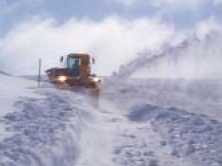 As to that 44 foot drift; 1963 was the first year the council tried out snow blowers. They imported one from Switzerland, brought it by low loader to Hexham then drove it from there towards that drift. About 200 yards from it it broke down and the drift had to be cut out by men with shovels and mechanical diggers.
 It took a long time for the snow to melt that year. In June, when I came home at half tern for a holiday there was still snow in places.
I'm not convinced of any of the 'Lore', it reminds me of the story of Indians who rang up the weather service to find out about the coming winter and were told it would be cold so they started gathering wood. When they checked again later they were told it would be very cold so they gathered more wood. Later still they were told it would be extremely cold so they gathered yet more wood. When they checked next they were told it would be the worst winter for years. 'How do you know?' they asked and got the reply 'Well the Indians are gathering wood like crazy.'
I do however remember an extremely bad winter. That of 1963. It was bitterly cold, the coldest on record, and it snowed in a big way!
 That year I was living on a hill farm in the North Pennines. The first I remember of that winter was when my father opened the front door and was met by a solid wall of snow. The previous five winters at the farm had taught us to keep a shovel inside the house so a few minutes digging got us outside. There had been a heavy snowfall but the howling wind had picked up most of the snow on the fells above us and blown it all into drifts in the valley where we lived, one of them burying our front door and the window of our sitting room. The picture shows our family standing outside that door and window later that summer.
We had to dig our way across the farmyard to the cow byre to feed the cows and while we were doing that the postman arrived. He had made it as far as our lane but had then given up. He left the mail for the village of Carrshield at the Chapel below our house saying 'If anyone gets here from there or goes there - ask them to take it'. Carrshield was a mere 2 miles from our house, further up the valley so to a 14 year old boy that was a challenge. I got prepared. By then we had learnt to wear two pairs of jeans, one inside our wellingtons and one outside. Not only did that keep out the bitter wind but it also prevented snow from getting inside wellingtons. I put on a thick pullover, mits, Woolen hat and two jackets, one with a hood. Looking like the Michelin man I made my way down the lane to the chapel, struggled to put the post bag over my shoulder and marched off into the blizzard.
 About 200 yards further the road went through a series of bends, through a small wood and over a small stream. It was there I met one of our neighbours, Roland Johnson, trying to dig out his Landrover which had got stuck in the snow. I gave him a hand and he turned back towards his home. I continued up the road - or at least what I thought was the road since the snow had completely covered it, the wall at the left and the fence at my right. It was hard going since the snow was soft and deep. I sank up to my thighs in it and began to think plans for making a set of snow shoes out of old tennis rackets.
About another 20 yards and I got tangled up in something buried in the snow. Fence wires? Nope it was telephone wires still attached and normally 20 feet in the air. That's when I gave up! Carrshield's mail could wait.
 The snow there turned out to be 22 feet deep after it had packed down and dug out. One of the pictures I have of it shows my brother-in-law, Colin Graham, standing on the shoulders of a friend, Brian Myers, next to the drift. As you can see the snow still towers above them.
It took gangs of men three weeks to dig their way to Carrshield. Even then there was one road which remained closed even longer where it went through a cutting which had been completely filled with a 44 foot deep snow drift.
 As to that 44 foot drift; 1963 was the first year the council tried out snow blowers. They imported one from Switzerland, brought it by low loader to Hexham then drove it from there towards that drift. About 200 yards from it it broke down and the drift had to be cut out by men with shovels and mechanical diggers.
 It took a long time for the snow to melt that year. In June, when I came home at half tern for a holiday there was still snow in places.
Subscribe to:
Posts (Atom)